Accreditation
All the information about our model and process of Accreditation.
What is accreditation?
Accreditation is a voluntary and non-governmental process that includes an external review of the institution's ability to provide quality education programs. At EQUAA, we believe that accredited programs must be of the highest quality and must reflect trends of change and innovation in education at an international level.
Higher education accreditation is not a new concept; it has existed for over 100 years in certain regions of the world. It is useful in many aspects, from ensuring that students learn relevant material for their professional careers to the access that schools may provide to forms of funding. Institutions accredited by EQUAA must demonstrate not only high overall quality in all dimensions of their teaching activities but also a degree of internationalization. An accreditation report includes: self-assessments, peer reviews, committee reviews, and the development of strategic plans.
About EQUAA accreditation
EQUAA is a results-based accreditation model. In this way, it simplifies the accreditation process and focuses on analyzing and helping institutions meet a value proposition for the educational unit they wish to accredit.
The creation of accreditation profiles allows for the evaluation of an educational unit according to the work that the graduate of the accredited institution or the institution in the accreditation process will perform. Therefore, each dimension of accreditation evaluated by EQUAA will be measured according to the profile it is in. In this way, it seeks for educational units focused on different profiles to be evaluated in the 5 dimensions, considering what is relevant and important for each profile.

International Recognition
The 5-level accreditation model of EQUAA is modified by the 3 accreditation profiles and seeks to evaluate and certify quality, according to the mission of an educational unit and in an objective manner. Being accredited by EQUAA is an international recognition that the educational unit meets a certain level and is in a process of continuous improvement for the benefit of society.
The main result of this process is to offer students what was promised to them and what the market values and expects. Being accredited by EQUAA at its various levels is a recognition that the institution is providing an education that reflects what has been set as its mission and what the market and society require. Academics linked to EQUAA from more than 20 countries recognize the importance of an accreditation model that measures the results of educational programs based on their mission and objectives.
Accreditation Levels
5 scales of accreditation from 1 to 5 stars promote the start of a continuous improvement process for all institutions committed to quality.
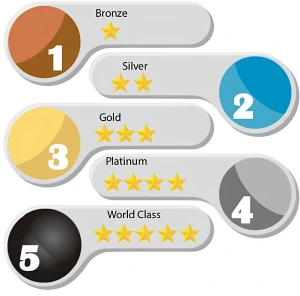
Profile-Oriented Programmatic Accreditation
Profiles for management and business areas
Profiles for law, education, and humanities areas
Accreditation dimensions
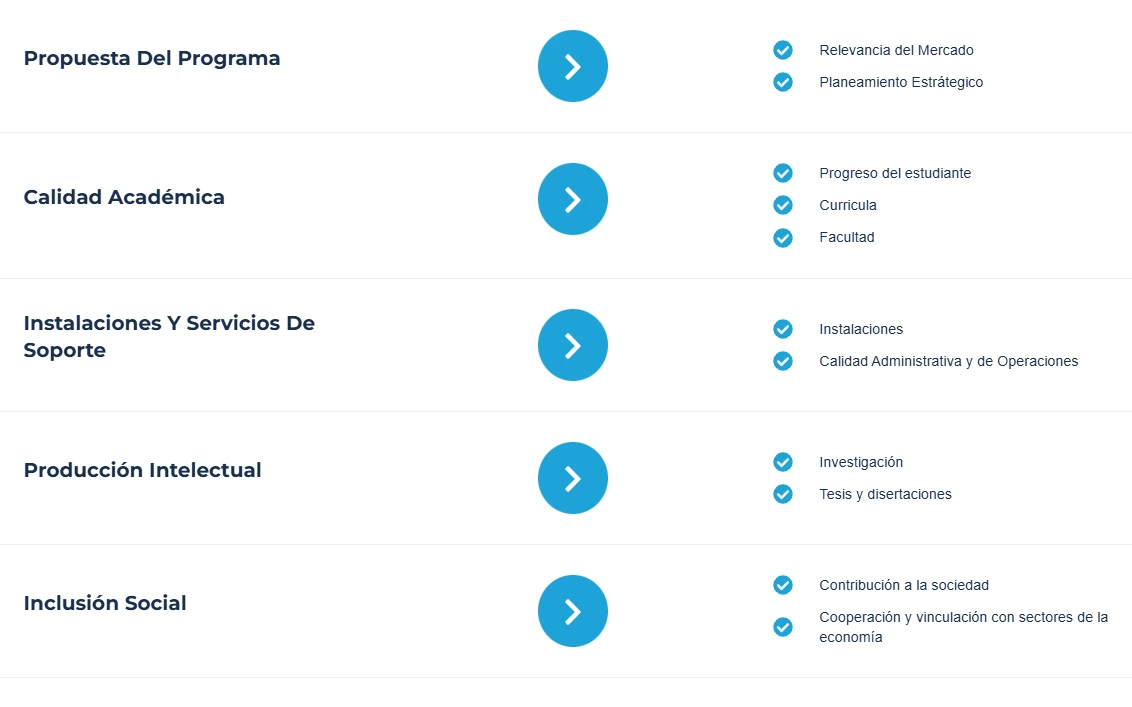
The EQUAA improvement process carries out accreditation for educational units and at the institutional level. The accreditation period for an educational unit is 2 to 3 years. A university may request the accreditation of several educational units simultaneously or start with one educational unit (usually the one that is most important to it). Universities may certify the accreditation of each educational unit that meets the standards defined by EQUAA. The duration of the accreditation process takes between 8 and 12 months and its validity will be between 4 to 6 years, depending on the level of accreditation achieved and the type of improvement recommendations made by the peer committee for the program.
EQUAA Accreditation Request
ELIGIBILITY APPLICATION FORM